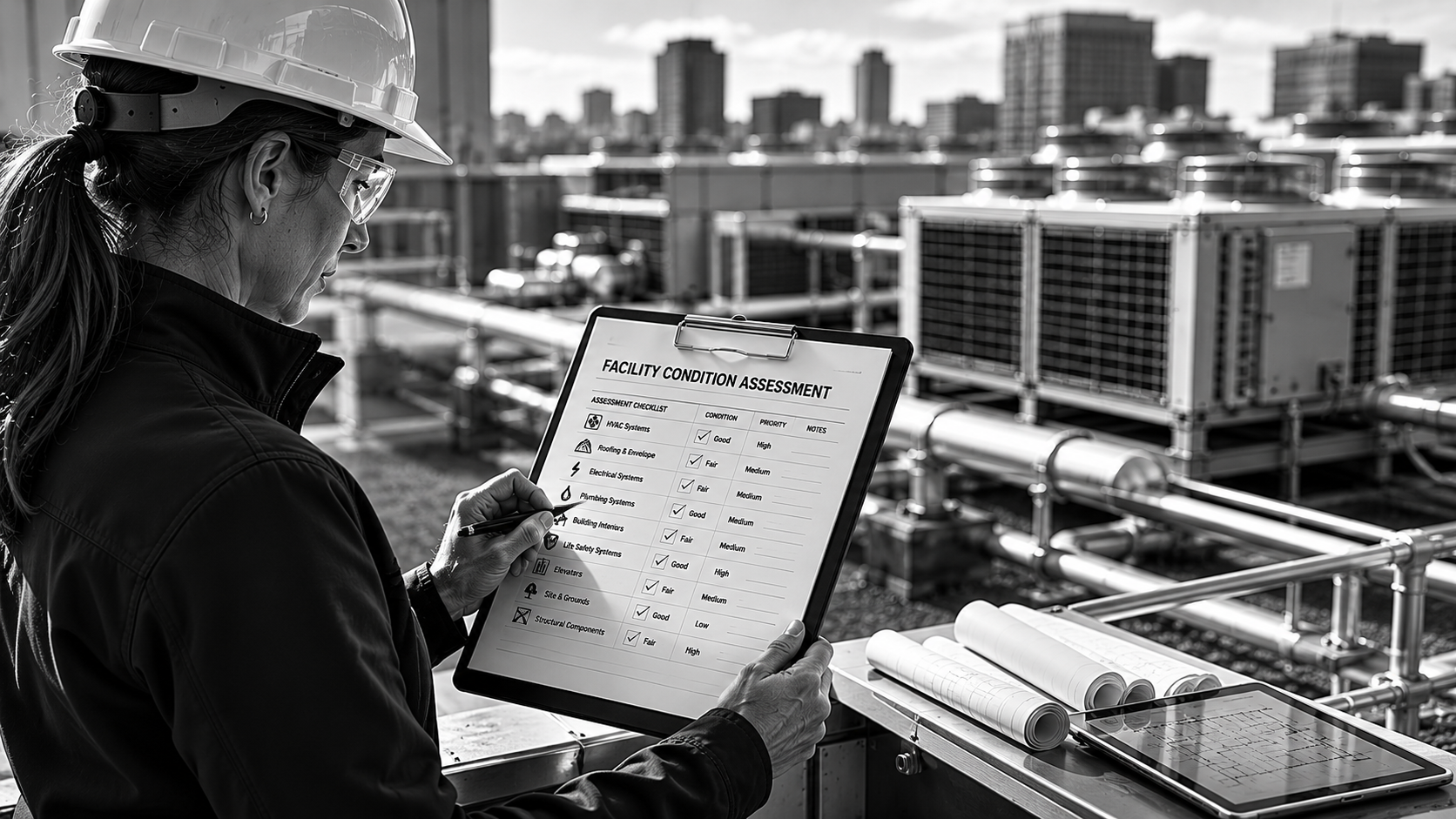
FACILITY CONDITION ASSESSMENT CASE STUDY
Challenge
An organization needed a comprehensive understanding of the condition, performance, and remaining useful life of its facilities and infrastructure assets. Leadership required objective data to support capital planning, risk mitigation, and long-term asset management decisions.
Key questions included:
• What is the current condition of critical building systems?
• Which assets represent the greatest operational or financial risk?
• What deferred maintenance liabilities exist?
• What capital investments will be required over the next 5–10 years?
• How should projects be prioritized to balance risk, cost, and operational impact?
Approach
A facility condition assessment was conducted that included:
• Building and site inspections
• Mechanical, electrical, and plumbing system evaluations
• Asset inventory and condition documentation
• Deferred maintenance assessment
• Remaining useful life analysis
• Risk and criticality evaluation
• Capital renewal forecasting
• Executive reporting and recommendations
Key Findings
• Several critical infrastructure assets were approaching end-of-life and required proactive replacement planning.
• Deferred maintenance items presented increasing operational and financial risk.
• Opportunities existed to improve asset reliability through targeted capital investments.
• A structured capital renewal strategy would reduce unplanned failures and improve long-term budget predictability.
Services Provided
✓ Facility Condition Assessments
✓ Asset Inventory & Documentation
✓ Deferred Maintenance Analysis
✓ Remaining Useful Life Evaluation
✓ Risk & Criticality Assessment
✓ Capital Renewal Forecasting
✓ Infrastructure Strategy Development
✓ Executive Reporting & Recommendations
Results
• Established a clear understanding of facility asset conditions and associated risks.
• Identified and prioritized capital improvement requirements.
• Developed a multi-year capital planning roadmap.
• Supported informed decision-making regarding infrastructure investments.
• Improved visibility into future maintenance and replacement obligations.
Representative Engagement
The assessment provided executive leadership with a comprehensive understanding of facility conditions, asset performance, and infrastructure risks. The resulting analysis supported long-term capital planning, improved asset stewardship, and enabled data-driven investment decisions aligned with organizational objectives.